

I was encouraged to write this in English, and it surprised even me how radically different the answer becomes in two languages. To explain what I’m working on, I need to briefly outline what I’ve been doing lately, and I find it refreshing that within these frames I now look at the economy and applied science of communication, and even art.
Now that I’m past the half‑century mark (I’m afraid it shows), I’ve accumulated so many professional registers that I can play social media like a pipe organ, moving between keyboards and registers as if they were different voices — they are. Using my own series on strategic communication, critical thinking, or brainy satire episodes as the pipes, I can orchestrate combinations of skills, knowledge and competencies that keep us in the driver’s seat — instead of blindly outsourcing everything to AI.
My current focus is designing a system in which all the things I enjoy — and want to expand — can run in optimised processes. A system where I can govern attention globally, if needed, or target it to very specific audiences. Since I have a broad variety of original content, I can test and measure market and audience feedback with great precision. I plan and post diverse content, and I log every change in market response, algorithm behaviour, and platform dynamics.
Sometimes I worry that I’m hardly human. At my most productive, I use AI to humanise my everyday communication, while being extremely specific in other work because I still find the human mind and consciousness superior — but only on one condition: you do not cheat. My drive remains creating honest results and taking full accountability for every endeavour.
Part of this is that I am, fundamentally, a Communications Manager with decades of writing and editing across a broad range of subjects, including highly technical ones. I have enough journalistic instinct to make any topic work through a problem‑sensitive approach and good questions (see my “slalom article”). But being able to engage high‑calibre partners and produce content in any genre or style is not even the tip of the iceberg. I’m also perfectly happy to optimise the price I can command for the value I consistently deliver.
Writing — as learning, self‑management, and universal exploration, and in the highest form: literature — remains my most delicate, secret, slightly filthy pleasure. It has so little to do with any human being that it’s almost worrying. Except I’m perfectly fine with it. I just sometimes wonder how I became this alien — quite like How to Become an Alien; I’m certainly a subspecies.
So my current rethinking of my resources and abilities — the ones I can and will put a price tag on — is about carving out exponentially more time to increase the value of all my activities. This is where the idea of C1Noesis comes in.
None of this should be all‑consuming. I’m designing a system that allows hyper‑productivity while securing time for new learning, the wellbeing that enables new learning, and learning through play and experimentation. I want to see how my unusual combination of knowledge can produce the greatest service — though not necessarily only that. I’m looking from a bird’s‑eye view, factoring in global geopolitics, and trying to create a healthy balance with home life (which is nothing you could imagine, I assure you).
It’s a real question whether I want visibility at all. Some visibility is necessary. But I have no desire for power — even though I’m aware of my innate ability to excel in crisis and do, without hesitation, whatever needs to be done. That ability has value, and the time may come when it can serve a greater purpose.
For now, I want to create a bubble where I can reassess my competencies, decide how much I want — or don’t want — to be seen, and weaponise language as a catalyst for good causes. I plan, design, and implement systems that can create organic change, and it’s time to use that power well. There is no shortage of causes worth serving — one could drown in them — but I don’t intend to drown. I intend to be the engineer of good change. And to keep my focus and discernment sharp, I let myself clown, do stand‑up if needed, anything that keeps the ego on a short leash. It’s really nothing more than a functional clothes rack: useful when it holds things together, dangerous only when you start admiring it.
…and I often feel as if I’m moving a slow, ancient fish through deep water — that strange, stubborn creature you meet in the old stories of my region, the kind where the memory of misjudged decisions and the desire to serve swim side by side, as in Babits’ Jónás imája. It keeps my sensors in perfect shape, lets me hold my assets exactly where they need to be. That’s why I never feed the ego. I feed the mind.
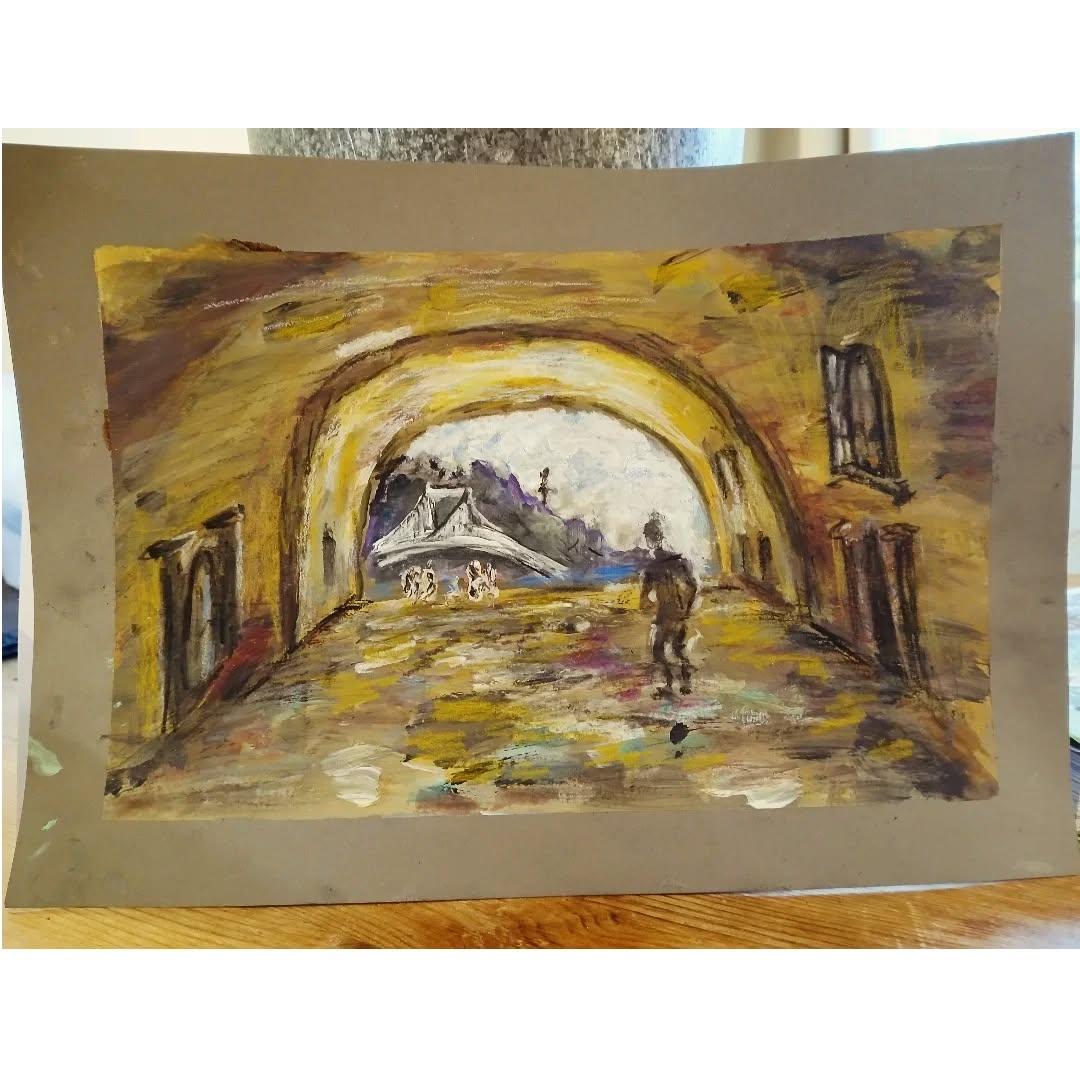
Illustration
1 One of the most beloved corners of Budapest Illustration
2 Iván Markó, one of the most extraordinary ballet dancers of his generation